Imaging-Based Tests
Create visual representations of the heart's structure and function, such as Echo, MRI, CT, and Stress Echo.
A Guide To Confidently Understanding & Navigating Your CHD Tests
Choosing the right cardiac test depends on many factors. This guide explains what each test excels at, why it might be ordered, and some risks — so you can ask informed questions and share concerns your cardiac team may not be aware of.
Developed by The EmpowerMyCH Research Team and Advisory Board — patients, families, and clinicians
Medically reviewed by
Dates Published · Reviewed

Choosing the right cardiac (heart) test depends on many factors that your cardiologist carefully considers.
This guide explains what each test excels at, why it might be ordered, and some risks.
This will prepare you to feel more confident asking informed questions and sharing any concerns or risks your cardiac team may not be aware of.
These cardiac tests are important for providing your cardiology team with information to:
Imaging-Based Tests
Create visual representations of the heart's structure and function, such as Echo, MRI, CT, and Stress Echo.
Non-Imaging Based Tests
Assess the heart's electrical activity and overall performance using ECG/EKG, Heart Monitor, and Stress Test.
Different heart tests, such as echocardiograms, cardiac MRIs, and CT scans, examine your heart in slightly different ways. For example, your ejection fraction (EF)—a measure of how well your heart pumps blood—might not be the same when measured by an MRI versus an echocardiogram.
It's important to understand that these differences don't necessarily mean one result is wrong. When tests are performed close together, differences in values may reflect differences in the methods used to measure your heart.

Typically, all cardiac imaging should be done at a specialized CHD center.
Why? Specific expertise in congenital heart care and specialized machines is required to obtain accurate images of your heart, which are often available only at CHD centers.
CLINICIAN EMPOWERMENT
CHD doctors often face problems when medical tests, even at well-known adult centers, are unclear, incomplete, or incorrectly read. This might require them to order the same test again, causing delays with insurance, extra radiation exposure, or delaying treatment.
EMPOWERMENT
If you had imaging tests done at another clinic or hospital, try to get the test images on a CD to bring to your ACHD visit.

There are many nuances to how a report is generated. Below is a general guide.
Heart Function Details: Your Echo, MRI, or CT report will often contain a summary of your heart valves and heart function, including:
*Sometimes, these details are described subjectively, such as "normal", "mild", "moderate", or "severely abnormal".
Structural Details: How the heart structures appear, such as narrow or enlarged blood vessels.
Focus on the Change: You have lived with your CHD all your life. So, how your heart functions or its structure appears on one report is less important than what has changed over time. Discuss any changes with your cardiologist, noting if new or worsening symptoms accompany them.
EMPOWERMENT
It is important to confirm whether any variations from test to test reflect actual differences in your condition. Variations can sometimes reflect changes in the technique used to complete the study or report the test results. So, schedule a follow-up appointment with your ACHD team to discuss your test results.
Echocardiography is the first-line imaging choice for assessing heart health. It effectively evaluates the function of the heart muscle and valves, as well as blood flow patterns.
What It Is
An Echocardiogram, or Echo, is an ultrasound test that uses sound waves to examine the structure and function of the heart.
How It Works
During an Echo, a cardiac sonographer uses an ultrasound device (transducer) to capture live images of your heart valves and chambers.
Prep: ~10-15 minutes; Test: ~45-60 minutes
Sound + Images
The sounds you hear during an Echo are the sounds of blood flowing through your heart. These sounds, combined with images, help the cardiac sonographer and cardiologist assess:
PEER EMPOWERMENT

You should not be concerned if the test is longer, shorter, or sounds different than other tests you've taken. The experience can vary considerably based on the sonographer, their equipment, and the part(s) of the heart they are observing.
Other Important Assessments
EMPOWERMENT
Echocardiography is so popular because it uses no radiation, is extremely cost-effective, and can give instantaneous results.
Types of Echos
The sounds you hear during an Echo are the sounds of blood flowing through your heart. These sounds, combined with images, help the cardiac sonographer and cardiologist assess:
Transthoracic Echocardiogram (TTE)
The most common type of "heart echo". Performed by placing the ultrasound transducer outside your chest (thoracic area).
Transesophageal Echocardiogram (TEE)
Performed by inserting a thin, flexible probe with an ultrasound transducer down your esophagus (throat). This shows your heart and valves in greater detail than a TTE because your bones and tissues aren't in the way. A TEE is performed only when your cardiologist needs to better visualize your heart structures.
EMPOWERMENT
During a TEE, the flexible probe is lubricated to help it slide easily down your throat and into your esophagus. While this may feel uncomfortable, it usually won't harm you. You may need to swallow to move the transducer into the right spot. Also, you are usually lightly sedated during the TEE, so arrange transportation, as you will not be able to drive yourself.
Cardiac MRI provides higher-resolution, more accurate measurements of many heart features, including heart function, valve performance, and tissue health. It does this by excelling at high-resolution soft tissue imaging.
What It Is:
A Cardiac MRI (Magnetic Resonance Imaging) uses powerful magnets and radio waves to create detailed pictures of your heart's structure and function.
How It Works:
During the test, you lie on a table that slides into a large, tube-shaped MRI scanner. The scanner uses magnets and radio waves that rotate around you to create highly detailed images of your heart, focusing on soft tissues, such as the heart muscle and valves. The radiology tech may administer contrast (Gadolinium) through an IV to enhance image clarity.
Prep: ~30 minutes; Test: 1-2 hours
Cardiac MRI provides detailed soft-tissue imaging, does not involve radiation, and is ideal for evaluating heart muscle, inflammation, and scarring.
EMPOWERMENT
MRIs could be very loud and long. Wear headphones during the test. The MRI technologists usually offer them, or you may be able to use your own during the test.
Cardiac MRI Strengths
Setting Yourself Up for A Successful MRI
Some people (especially those who fear closed spaces, also known as 'claustrophobia') often find it difficult to tolerate a cardiac MRI. Your doctor may be able to prescribe medication to help you relax.
While echocardiography and cardiac MRI are excellent for evaluating heart function and tissue health, Cardiac CT is particularly valuable for visualizing complex cardiac anatomy and blood vessels. It does this by excelling at high-resolution, three-dimensional spatial imaging.
What It Is:
A Cardiac CT uses X-rays to create 3D images of your heart structure and blood vessels.
How It Works:
During the test, you lie on a table that slides through a large, doughnut-shaped CT scanner. The scanner uses X-rays to take detailed, high-resolution images of your heart and blood vessels. The radiology tech usually administers contrast (Iodine) through an IV to enhance image clarity.
Prep: ~30 minutes; Test: 30-60 minutes
Cardiac CT is faster than Cardiac MRI, uses X-rays, and has some radiation exposure.
It excels at capturing detailed images of blood vessels, bones, and large structures such as the aorta and pulmonary artery. Cardiac CT is usually better tolerated than MRI if you have claustrophobia.
Like an MRI, a CT is expensive.
Cardiac CT Strengths
Cardiac MRI
Cardiac CT
Non-imaging tests often measure the electrical signals from your heart. By studying these signals, doctors can see how well your heart's natural electrical system works, find problems with blood flow, and check the size of its chambers.
Where should I go for my non-imaging tests?
Typically, you can do these tests at any center that offers them and is most convenient for you.
Non-Imaging Test Strengths
An Electrocardiogram (ECG/EKG) is the first-line non-imaging choice for assessing heart health. It provides valuable information about the heart's electrical system and can also give clues about the heart muscle and chamber sizes.
What It Is
An ECG/EKG is a non-imaging test that records your heart's electrical activity.
EMPOWERMENT
Discuss any new or changed symptoms with your cardiologist, such as palpitations or chest pain at rest or exertion.
How it Works
An ECG/EKG is a simple test where small stickers (called electrodes) are placed on your chest, arms, and legs. These electrodes are connected to an ECG/EKG machine. The electrodes pick up electrical activity from the heart and produce an image of your heart rhythm.
Prep: ~5 minutes; Test: 5-10 minutes
An ECG/EKG helps your doctor to evaluate:

A Heart Monitor is a non-imaging tool that tracks your heart's electrical activity over time. It provides valuable information about your heart rhythm, helps detect irregular heartbeats (arrhythmias), and heart blocks.
Holter Monitor and Event Monitor
Prep: ~15 - 20 minutes; Test: 1 – 30 days
What It Is
A Heart Monitor is a portable, long-term ECG/EKG device worn for 24-48 hours (Holter Monitor) or 7-30 days (Cardiac Event Monitor), which provides information about the heart's electrical system.
Your doctor may recommend a Holter Monitor or Cardiac Event Monitor, based on availability, insurance coverage, and the nature of your symptoms.
How It Works
A Heart Monitor is done by attaching small stickers (electrodes) to your chest. These electrodes are connected to a small device that continuously records your heart's activity.
You can wear a Heart Monitor for 1 - 30 days, depending on the type. It tracks your heart rhythm during that time. After you return the monitor, your doctor will review the recordings for signs of heart rhythm problems.
Benefits of a Heart Monitor
Patients with congenital heart disease are at risk for abnormal heart rhythms and blocks in the electrical system of the heart. A heart monitor checks your heart's rhythm over a longer period than a regular ECG/EKG. Helping your doctor to evaluate:
Preparing for a Smooth Heart Monitor Experience
EMPOWERMENT
Keep a diary to note your activities and any symptoms while wearing your monitor. If you notice any symptoms, such as palpitations, chest pain, fast heartbeat, or dizziness, push the button on the monitor to mark the event. This will help your doctor assess whether these symptoms are related to an abnormal heart rhythm. Don't worry if you forget to press the button. The monitor will be continuously recording.
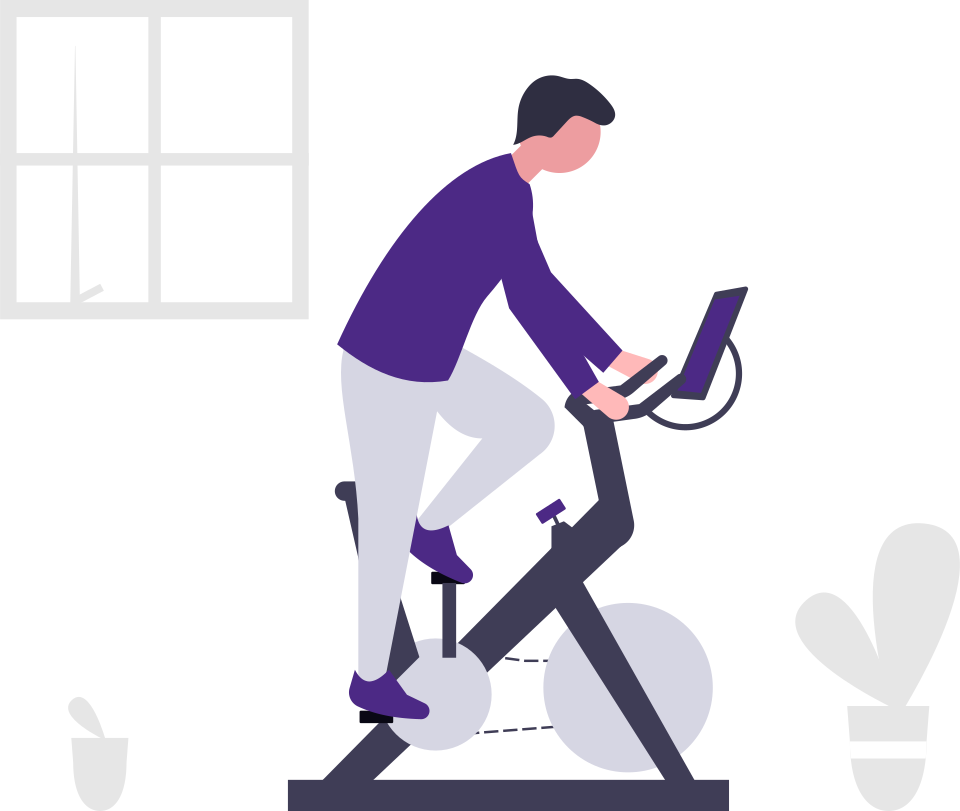
Stress Tests evaluate your heart's response to exercise. There are three common types of tests for patients with CHD: an Exercise EKG Test, a Cardiopulmonary Exercise Test (CPET), and a Stress Echo.
Peer Question
Are stress tests necessary when you have a pacemaker?
Provider Answer
Having a pacemaker does not limit the ability to do a stress test or affect the accuracy of the results. Stress tests are ordered for various reasons—from assessing one's exercise capacity, blood pressure and heart rate response to exercise, or signs of compromised blood supply to the heart. Ask your physician to explain why they ordered the test.
3 Common Types of Exercise Tests
Exercise EKG Test
Exercise Time: 8-30 minutes; Total Time (Prep, Exercise, Cool Down): 1-2 hours
EMPOWERMENT
Let your cardiologist know if you have been told by another doctor that you have to limit your exercise, for example, due to your knees or back.
Cardiopulmonary Exercise Test (CPET)
Exercise Time: 8-30 minutes; Total Time (Prep, Exercise, Cool Down): 2-3 hours
EMPOWERMENT
Wear comfortable shoes and clothes for exercise. Let your cardiologist know if you have been told by another doctor that you have to limit your exercise. Avoid exercising on the day of the CPET as this can affect the results.
Stress Echo
Exercise Time: 8-30 minutes; Total Time (Prep, Exercise, Cool Down): 3-4 hours
Need to schedule multiple tests?
If convenient, you can schedule all or most of your tests on the same day!
However, this might require you to call multiple departments, such as Radiology to schedule your MRI and Cardiology to schedule your echo or stress test.
Often, ACHD programs have patient coordinators or navigators who can help schedule most of the tests for you on the same day—ask your ACHD team about it!
PEER EMPOWERMENT

I will not schedule a Cardiac MRI and Cardiopulmonary Stress test on the same day unless necessary. For me, they are too exhausting both mentally and physically.
Need to arrange transportation?
Medicaid Transportation
State Medicaid programs offer transportation to help eligible individuals access care, such as medical, dental, or mental health appointments, and to pick up prescriptions or supplies for covered services.
Public Transit
Public transit agencies must provide paratransit (accessible) services for individuals with disabilities who cannot use standard bus or rail services. These services require an application and a fee.
You can search online for paratransit services in your area to learn more.
EMPOWERMENT
Talk to the social or case worker at your primary care or CHD clinic for help finding transportation resources in your area and assistance with applying.
Prior Authorization
Does this test require prior authorization?
PEER EMPOWERMENT

I received a medical bill that was higher than expected; fortunately, I was able to set up a monthly payment plan, which helped alleviate the financial stress of a large one-time payment.
Managing Insurance
When do I need a letter of medical necessity?
A letter of medical necessity is a letter that an insurance company will request from your physician, asking for the reason or medical necessity for the procedure. Sometimes this is a letter, and other times it's a peer-to-peer conversation between your provider and a provider employed by the insurance company.
What does it mean if my test is denied?
A denial means the insurance does not cover the cost of the test. Often, the insurance company needs more information to approve the test.
If your insurance company denies a test, procedure, or visit, contact your doctor's office immediately. Ask what they can do to help overturn the denial and start the appeal process. They can also guide you through the next steps, including contacting the hospital if necessary.
If you receive a denial from your insurance company for a particular test (procedure or office visit), contact your doctor's office immediately. Make them aware of the denial and ask what they can do to overturn it.
Your doctor's office will need to start an appeal process. If the denial is for a procedure at a hospital, you might need to call the hospital directly.
PEER EMPOWERMENT
When my insurance company denied a test ordered by my cardiologist. I spoke with my cardiologist, and we discussed two possible solutions. The first option was to request a Peer-to-Peer Review. The second, suggested by my cardiologist, was to postpone the test to a later date when my insurance company would most likely approve it. I decided to postpone the test and have a virtual visit with my cardiologist instead.
Some tests, like CT and X-rays, involve small amounts of radiation. The radiation risks are typically small compared to the study's benefits. However, these risks increase with age, pregnancy, and other conditions. If you are concerned, ask your provider for more information.
Long-Term Exposure: While the risk from a single imaging study is low, repeated radiation exposure over time can increase the risk of developing cancer. If you are undergoing repeated scans, particularly CT, you should be mindful of the cumulative dose. Discuss the necessity of each scan with your doctor and explore alternatives when possible.
Pregnancy: Radiation exposure during pregnancy carries a small risk to the developing fetus. Imaging studies involving radiation, such as CT scans or X-rays, are usually avoided, particularly in the first trimester, unless necessary.
Age: Children are more sensitive to radiation than adults. Clinicians prioritize echocardiograms or MRIs whenever possible.
Contrast agents used in imaging tests, such as CT or MRI, enhance image clarity by highlighting specific structures. While typically safe, they carry some risks, including:
Allergic Reactions: Include itching or a rash (rare) and difficulty breathing (extremely rare).
Side Effects: Include a metallic taste, nausea, or warmth during administration.
Impact on Kidney Function: In people with kidney conditions, contrast agents may temporarily or permanently affect kidney function.
Inform your healthcare team about any prior contrast reactions, allergies, or kidney issues so they can take appropriate precautions.
PEER EMPOWERMENT
I was concerned when I had an allergic reaction to contrast because I did not know if the test would still be meaningful without the dye. I was happy to learn that these tests are still meaningful even if your provider has to take precautions.
EmpowerMyCH puts a digital medical passport, ACHD provider directory, and expert guidance for managing CHD right in your pocket. Available on web and mobile.
Join Now (opens in new tab)